How large do you want your implants? That’s an important consideration for any woman considering breast augmentation. Going too big or too small may result in disappointment.
Making your own breast implant sizers is a good way to help you decide. Wearing the sizers at home can help you figure out which size will make you feel most comfortable and look best under your clothes.
Rice implant sizers are a simple and cheap DIY project that allows you to test out various implant sizes. Here’s what you need to make your own rice implant sizers:
- Panty hose or knee high hose
- Measuring cups
- Dry rice
- Scissors
To make your breast implant sizers, first cut the legs off of the panty hose halfway from the bottom and stretch each out. Then measure your rice carefully, using the following guidelines:
- 1 cup is equal to 250 cc
- ½ cup is equal to 125 cc
- ¼ cup is equal to 75 cc
After you’ve filled the panty hose, compress the rice into the bottom into a spherical shape. Then tie a knot in the panty hose right above the rice filling, cut off the remaining tail of the panty hose, and you’re done.
Put your rice implant sizers in your sports bra and wear it under your tops to get an idea of how a specific implant size will look and feel. You may want to make and try out more than one set to get a better idea of what size implants you like best. The video below shows how to make the rice implant sizers.
To learn more about breast augmentation, contact Dr. Haiavy.
 A small study suggests that abdominal liposuction patients should exercise regularly after their procedure to keep from developing deep belly fat.
Patients in the Brazilian study who didn’t exercise after surgery had an increase in visceral fat around their abdominal organs.
Visceral fat is more closely associated with diabetes and heart disease than superficial fat found just under the skin.
The study had 36 women who were at a normal weight and were sedentary before the procedure. All had liposuction to get rid of small amounts of abdominal fat. Two months later, half were assigned to an exercise program and half remained sedentary.
Six months after surgery, the women still had flatter abdomens, but the sedentary group showed a significant 10 percent increase in visceral fat compared to before the surgery. The group who exercised after liposuction did not see an increase in visceral fat.
The researchers concluded that abdominal liposuction doesn’t cause a regrowth of fat, but it does “trigger a compensatory increase of visceral fat.” However, the fat can be “effectively counteracted by physical activity.”
Researchers said it was unclear why there was an increase in visceral fat, “but we believe it may be because this particular fat depot is more metabolically active than the other fat depots,” study leader Fabiana Benatti told Reuters.
Exercise after Abdominal Liposuction
The results of this study suggest that staying or becoming active after abdominal liposuction will stop the increase in visceral fat in the area.
“If one should choose to undergo liposuction, it is very important, if not essential, that this person exercises after the surgery,” according to Benatti.
Before the procedure, talk to your cosmetic surgeon about your expectations for liposuction and about what kind of exercise regimen he or she recommends afterward.
Contact Inland Cosmetic Surgery for more information about liposuction.
What is EXILIS? It is a laser for:
• Volume reduction
• Skin tightening
• Body shaping
• Local fat deposit elimination
• Cellulite improvement
It was featured on the Doctors Show!
It was also featured on Kathy Lee and Hoda Today Show:
TREATMENT PROTOCOL
• 4 sessions
• 10-14 days between each session
RECOMMENDATIONS AFTER TREATMENT:
• Increase in liquid intake ( more than 3,5 liter/day)
• Light physical activity
• Low fat diet
• Lymphatic drainage
CONTRAINDICATIONS:
• Acute inflammations
• Application on certain tissues
• Uncompensated cardiovascular diseases
• Metal implants (pacemaker, joint replacement, etc..)
• Kidney or liver failure
• Risk of bleeding – menstruation, bleeding tissues, peptic ulcers
• Sensation disorders
• Serious peripheral arterial circulation failure
• Thrombophlebitis and thrombosis known or suspected
To schedule your private consultation, please call 909-987-0899.
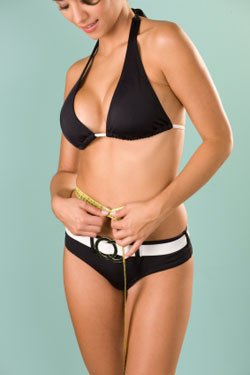 A researcher says waist-to-height ratio is better than BMI at predicting whether a person is at risk for obesity-related illnesses.
Your BMI, which stands for body mass index, calculates a number based on your height and weight that shows if you are a normal weight, overweight, obese or underweight. However, it doesn’t take muscle mass or the distribution of fat around the body into consideration.
A review of 31 studies that included more than 300,000 men and women found that waist-to-height ratio was better than BMI at predicting certain health risks associated with obesity, including high blood pressure, diabetes, heart attacks and strokes.
“Keeping your waist circumference to less than half your height can help increase life expectancy for every person in the world,” according to study leader Dr. Margaret Ashwell.
Dr. Ashwell calls the waist-to-height ratio a “one-size-fits-all approach” and says it should replace BMI and waist circumference alone as a way to assess body fat and health risks.
Calculating Your Waist-to-Height Ratio
Waist-to-height ratio is easy to determine—all you need is a tape measure. Measure your waist at belly-button level, and then measure your height if you don’t know it. Divide your waist measurement by your height to get your percentage.
Another advantage of waist-to-height ratio is its simplicity: keep your waist circumference to less than half your height. BMI is harder to calculate, and you have to remember or look up whether your BMI number falls into a healthy range.
Cosmetic Surgery & Weight Loss
For those who have lost a significant amount of weight, body contouring procedures can remove excess skin from areas such as the arms, abdomen and thighs.
Liposuction is also popular for removing stubborn areas of fat that don’t go away with diet or exercise. Patients should already be at a healthy weight for this procedure, as it is not meant for weight loss.
Sources: WebMD, Medical News Today
It’s time to tighten up where diet and exercise leave you rolling
 Many of my patients are frustrated with that stubborn pooch that just won’t tone with diet and exercise. If so, then a tummy tuck may be the surgical option that can give your mid-section the tweak it needs. However, realistic expectations and talking to the right surgeon is necessary to begin your journey. Like many of my patients, Janae 45, was unhappy about her excess skin and fat and she opted for the tummy tuck as she has had 3 children and was looking to have the extra loose skin and fat removed from her belly.
Though she is not considered obese, Janae was advised to lose a few pounds before considering the surgery. With the loss of a few excess pounds, the results of the tummy tuck are much more impressive and the patient satisfaction is much higher.
Toning the Tummy
A tummy tuck, also called abdominoplasty, is the surgical removal of excess skin and fat from the abdomen. The procedure not only helps tighten the skin where elasticity has been lost, it also tightens the muscles underneath that have become loose over the years with having children. It also removes stretch marks and can be used to rebuild the belly button when the belly button has been stretched out of shape.
I usually perform tummy tucks in combination with Liposuction. This combo gives great results for patients such who have fatty tissue, especially in the upper tummy.
As for recovery time, “the procedure was on a Friday and I was actually back to work on Wednesday,” says Janae.
Wanting More
More often than not, liposuction is part of many tummy tuck procedures that I do. Though liposuction will help you look better in tighter-fitting clothes, nothing will rejuvenate a tummy and make it look more like when you were younger, than an abdominoplasty.
For my younger patients with good skin elasticity and who are in relatively good shape, with no stretch marks and no significant abdominal bulging, I recommend the liposuction alone. On the other hand, I always let the patients know about the less-than-optimal results they are going to get with just liposuction alone. Liposuction does not tighten the muscles underneath nor remove excess loose skin. Some areas may even appear worse after liposuction due to the skin becoming more prominent.
To view before and after pictures of this and other procedures, you may visit https://www.inlandcosmetic.com/before-after-photos/ . Call 909-987-0899 to schedule your private consultation with Dr. Haiavy and to find out if you are a good candidate for this procedure.
 If you decide to have cosmetic surgery, there are numerous decisions to make, including choosing your surgeon and procedure. Deciding how to pay for your cosmetic surgery procedure is also important to determine.
While there are some rare instances when insurance covers the costs, such as after an accident, most of the time it is the patient’s responsibility.
“Consumers should be aware that cosmetic surgery is not covered under insurance, so all of the expenses must be paid out of pocket,” says Kevin Kautzmann, a certified financial planner.
Fox Business gives an overview of ten options for paying for cosmetic surgery, and here we offer a few of the highlights.
A health care or medical credit card is a credit card specifically for medical expenses and can be used for cosmetic procedures. Often these cards start with low promotional rates and can have reasonable payment plans.
If you don’t want to open a medical credit card, you could use your regular credit card or apply for a new one and take advantage of a 0% introductory period during which you could pay off your procedure.
For some, saving up and paying cash for a cosmetic procedure makes the most sense. “It may not be sexy, but the best answer for most people is to save each month until you have the bill covered—then get the procedure done,” says financial adviser Michael Masiello.
You can also check with your surgeon’s office to see if they offer payment plans. Some will create a plan tailored to a patient’s budget.
It may seem unconventional, but you could ask others to contribute to your procedure fund as a gift. This has become easier and more popular with online sites, such as DepositAGift.com and MyRegistry.com, as family or friends can make a deposit toward your procedure without even having to mail a check.
Learn more about financing options at Inland Cosmetic Surgery in Rancho Cucamonga and Victorville, CA.
 Cosmetic surgery is more accepted than ever before, but that doesn’t necessarily make it polite to ask someone if they’ve have work done.
Mary M. Mitchell, who has written several etiquette books, recently wrote a Reuters story about what she views as proper etiquette regarding cosmetic surgery.
For instance, if you run into a friend or acquaintance who looks different and you think they’ve had cosmetic surgery Mitchell says, “Don’t blurt out a comment.”
Many people may be sensitive about speculation on their appearance.
If you do ask a question, she recommends keeping it simple and keeping your reaction low-key.
Here are some other tips from Mitchell:
Don’t ask.
Don’t ever ask a person if they’ve had a specific procedure, such as a “nose job” or “implants.” It’s bad manners, according to Mitchell. Instead, tell them they look great, and it’s their decision to volunteer specifics.
Don’t criticize.
If a friend is considering cosmetic surgery, respect their choice. Don’t try and talk them out of it, says Mitchell. However, “it is equally important not to agree that the person does, indeed, need the work done,” she says. It is their decision to make.
Don’t judge.
When someone tells you they have had a procedure, she says the safest reply is to ask if they are happy with the results.
Don’t gossip.
When discussing cosmetic surgery, don’t ever share the names of other people you know that have had a procedure.
Be solicitous.
If someone reveals they have had cosmetic surgery, Mitchell says to ask how they’re feeling.
If you’re the one who has had a procedure and you don’t mind sharing, Mitchell says that “you can make it easier on those around you by opening the conversational door.”
Interested in cosmetic surgery? Contact Inland Cosmetic Surgery in Rancho Cucamonga and Victorville, CA.
 Couples have found a new activity to share—cosmetic surgery.
There’s anecdotal evidence from surgeons that this is a growing cosmetic surgery trend.
Cosmetic surgeon Dr. Mitchell Chasin says, “Years ago, we would see a wife come in and she would say, ‘I can’t let my husband know what I’m doing.’ And then the husband would come in and he would say, ‘You know what, this is a secret, please don’t tell my wife.'”
But today, according to patient Ira Almeas, the man’s attitude is usually along these lines: “If you’re gonna look good, I want to look good!” Almeas and his wife each had Botox, fillers and laser treatments.
NBC’s chief medical editor Dr. Nancy Snyderman says that part of the increase in couples pursuing cosmetic procedures together is attributable to the increase in cosmetic procedures in men, who now account for about 9% of those getting cosmetic surgery.
“It’s been destigmatized with men,” says Snyderman, who says procedures like Botox and fillers have become more acceptable.
Doctors who say they are seeing more couples cosmetic surgery report that their patients are typically in their late 30s to early 60s. Usually the women are done having children and both are having trouble losing weight through diet and exercise alone.
It’s no surprise then that liposuction is one of the procedures that is very popular with couples, although men and women often target different areas.
According to surgeons, men often request liposuction for their stomach, chest or chin, while women request any number of areas, such as their thighs, neck or arms.
Reita Greene, 59, had a facelift in January and says she was motivated because, “I wanted to have at least one good picture with my grandchildren before I die.” Her boyfriend of 16 years plans to have the procedure as well.
Sources: Los Angeles Times, TODAY Show
 Hyaluronic acid gel injections are popular for smoothing facial wrinkles; now in Europe they are also being used to enhance the breast.
Per Hedén, MD, PhD, of Sweden, says the injection is a simple and safe alternative for women who want to enhance their breasts, but aren’t ready to have breast implant surgery.
“Hyaluronic acid gel injection … provides immediate results with minimal discomfort, and in clinical trials, it was associated with high ratings of breast general appearance, shape and firmness,” Dr. Hedén told Cosmetic Surgery Times.
While hyaluronic acid fillers have been used for years to treat facial wrinkles, using them for the breasts is relatively new.
The hyaluronic acid gel that has been developed for use on the breast, Macrolane, is approved for use in Europe but does not currently have FDA approval in the United States.
Dr. Hedén says there have been no serious complications with Macrolane noted in studies, but it is too soon to have any long-term data on the procedure.
Breast Implant Alternative?
While the filler offers a less-invasive alternative to implants, it actually often opens the door to implants, according to Dr. Hedén, who says that 30 percent of his patients who first try injections eventually undergo breast augmentation.
In addition to a lack of long-term data, the gel has a few other drawbacks of which patients should be aware. The absorption of the material isn’t predicable, and the amount of gel that remains after a year varies anywhere from 5 to 85 percent. In addition, patients will probably need a touch-up after nine to 12 months, according to Dr. Hedén.
Since Macrolane does not have FDA approval, breast augmentation is the procedure most women choose in order to enlarge their breasts. One other possible alternative is fat grafting. Used mainly for the face, some cosmetic surgeons now use the technique for breast enhancement as well.
 Many breast augmentation patients are aware that they will need to choose the size and type of implant they want for their procedure, but many may not realize there is another important decision: where the incision will be.
While there will always be scarring with breast implants, New You Magazine recently gave an overview of some of the incision techniques being used to reduce the visibility of scarring.
Breast Augmentation Incisions For Minimal Scarring
Dr. Angelo Cuzalina, an Oklahoma cosmetic surgeon, pointed out that: “Different patients have different definitions of ‘minimal-scar’ surgery. But for some women, a scar on the breast just isn’t acceptable.”
Here are some options for breast implant incisions that avoid the breast entirely.
Arm Pit: This technique uses an incision in the pocket of the armpit and works best for those with deep armpits. One of the advantages of this incision, according to Dr. Cuzalina, is that the surgeon can visualize the muscle with a camera during surgery.
Belly Button: The transumbilical breast augmentation (TUBA) has the incision through the belly button, so the incisions are hidden in the navel. One drawback is that only saline implants can be used, and Dr. Cuzalina said that patients without a lot of fat on their stomachs may not be the best candidates.
Tummy Tuck: The transabdominoplasty, or TABA technique, can be used when the patient is having a tummy tuck at the same time as the breast augmentation. The surgeon then uses the tummy tuck incision to place the implants. However, this technique can’t be used if the patient also wants a breast lift.
If you are considering an incision technique away from the breast, be sure that your cosmetic surgeon is experienced with the technique you want, as the minimal-scar techniques can require greater skill.