Deep Plane Facelift (Rhytidectomy) Rancho Cucamonga
Let our experienced facelift surgeons help you look younger & feel more confident
Aging is a natural part of life—but that doesn’t mean you can’t do anything about it! As we grow older, our skin naturally starts to lose elasticity as our reserves of collagen and elastin wane. This plus gravity, the loss of fatty tissue, and repetitive motions like squinting or smiling over a lifetime combine to make the perfect recipe for sagging skin around the jawline and neck and the development of creases on the face. Heredity, sun exposure, and personal habits can all contribute to or expedite aging of the face.
Most everyone has heard of facelift surgery as the go-to procedure for reducing signs of aging on the face, but did you know that there have been tremendous advancements in facelift techniques in recent years—and that our surgeons are able to provide an incredibly natural outcome? We use the deep plane facelift technique to reposition and lift deeper tissues back to where they belong, creating a completely natural look.
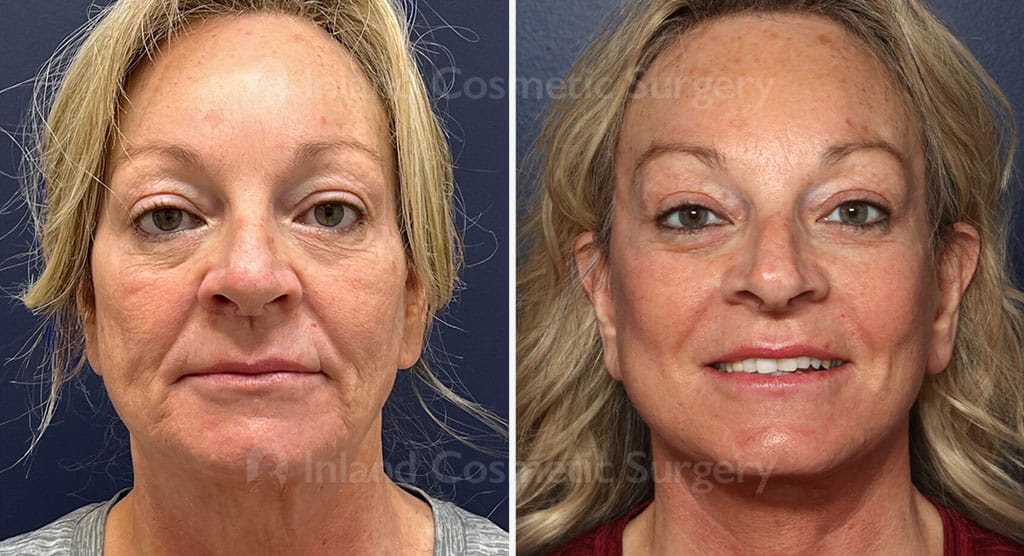
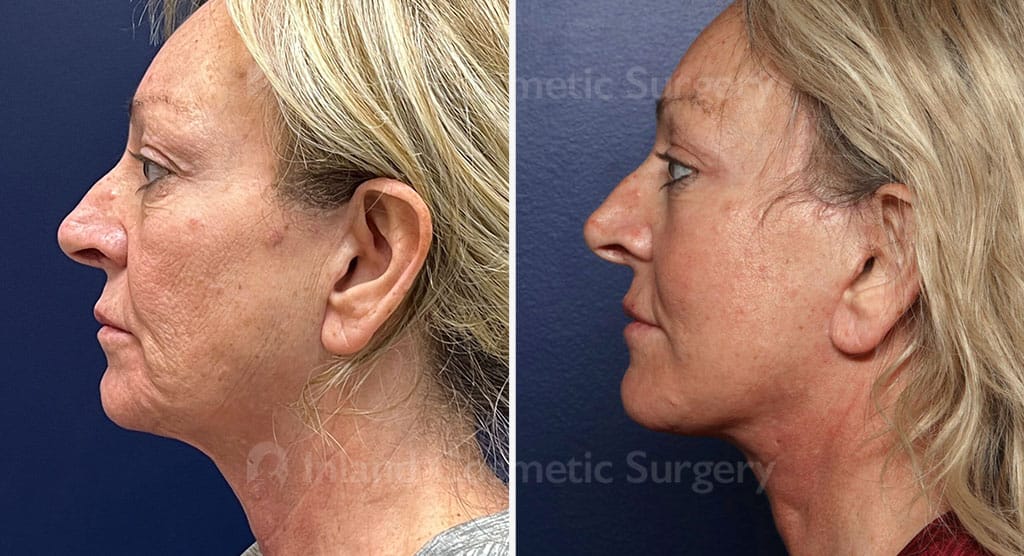
This is a 59-year-old female patient shown 3 months post-op from face lift and neck lift.
When should I have a facelift?
A facelift can be performed at any time after signs of aging appear—there is no hard, fast rule about what age is best. You and your surgeon will decide together when the best time is for you to consider a facelift. Typically, it may be time to start thinking about your options once you start to see:
- Loss of skin elasticity and muscle tone
- Jowls begin to form
- Deep creases start setting in on the mid-to-lower face
When the procedure is performed at a younger age, the results often last for a long time. Later in life, it can be a more difficult procedure, as muscles have become over-stretched and lost their tone; in these cases, results may not be as long-lasting.
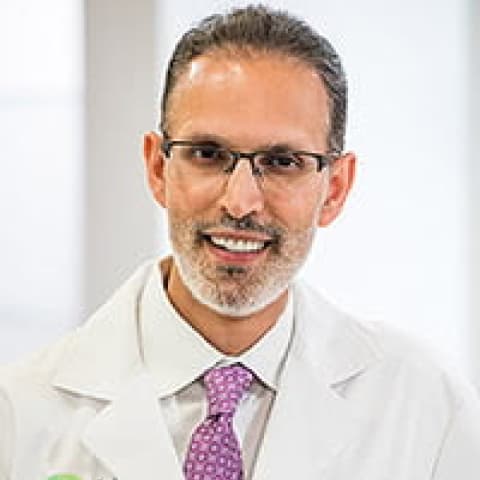
Dr. Haiavy has over 20 years of experience in the operating room and is a fully board-certified surgeon. With both the credentials and aesthetic eye to provide stunning results, she works with you to develop the surgical plan that achieves the results you desire safely.
What happens during a facelift?
A facelift addresses the mid-face and neck and is typically performed under general anesthesia. Your cosmetic surgeon will begin by placing small incisions in areas where they are well-hidden, usually just inside the hairline at the temple, running just in front of the ear, or in the ear cartilage and behind the ear. Through these incisions, the skin is elevated and the deeper structures (fascia and muscle) are tightened to achieve the desired result. At Inland Cosmetic Surgery, we exclusively perform the deep plane facelift technique to ensure each patient see the most natural-looking result possible.
In this video, cosmetic surgeon Dr. Jacob Haiavy discusses the facelift procedure:
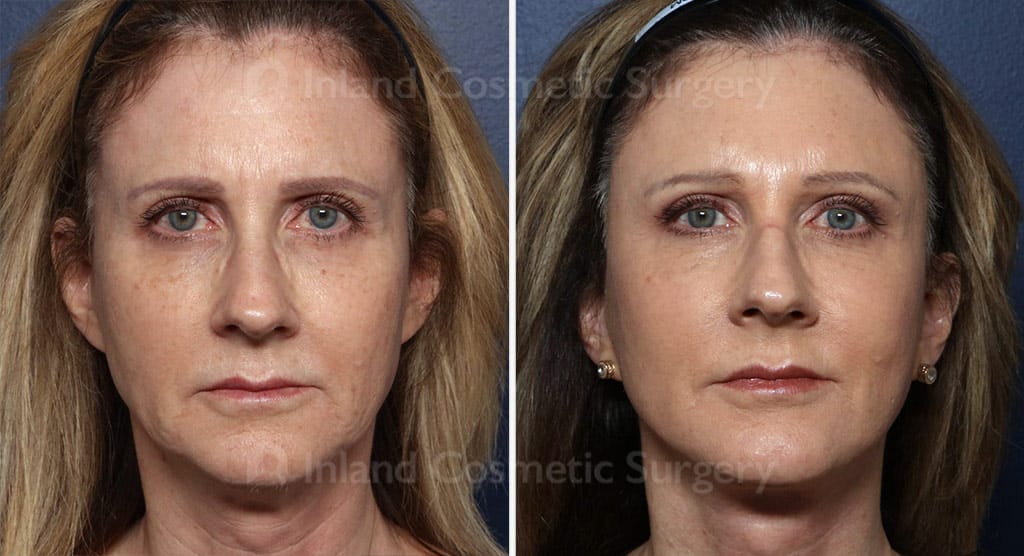
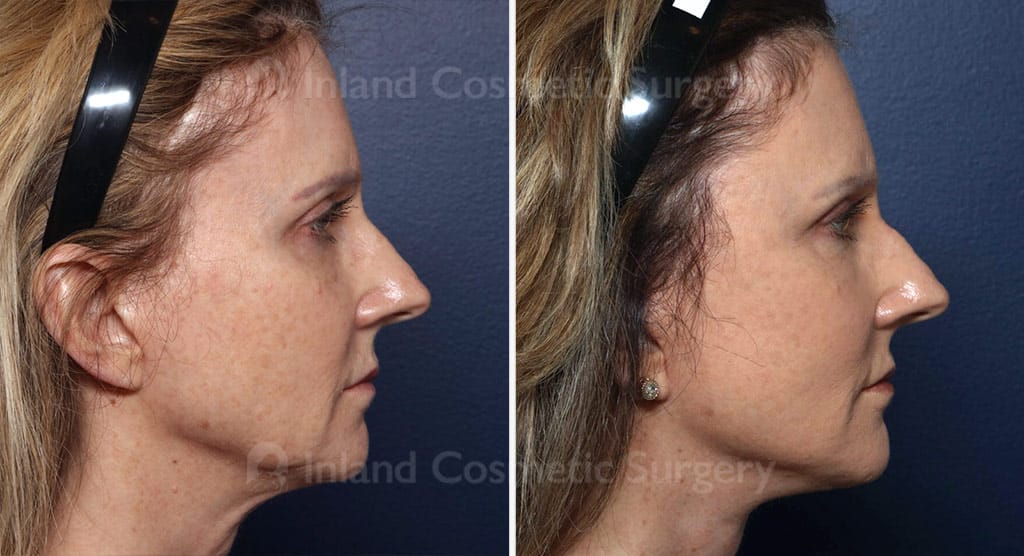
This is a 64-year-old female patient shown 6 months after Facelift, Necklift, Temporal Lift, and Fat Transplant to the face, plus Mixto CO2 Laser.
The deep plane facelift technique
During a deep plane facelift, your surgeon will elevate and tighten the support structures beneath the skin to reduce the appearance of deep creases and minimize sagging. This tightening and elevating of the fatty tissue and underlying muscles helps uplift the face to a more youthful position while also eliminating jowling. In some cases, excess fat is also removed from the neck and jowls with micro-liposuction to enhance results.
Overall, this technique has proven to be superior to other lifting procedures, providing a stronger lift and a more balanced improvement. Because the lift relies on deeper structures and not just the skin and muscles, the results are far longer lasting.
At Inland Cosmetic Surgery, our cosmetic surgeon Dr. Jacob Haiavy uses a hair-sparing technique in which we advance tissue rather than excise it in hair-bearing areas. This keeps the hairline intact and helps to avoid an overly tight, unnatural appearance. This technique is key because the major pull, or tension, of the operation is on the deeper structures rather than on the skin.
Video Transcript
“With facelift surgery, I know that people go through a lot of emotions after surgery. It is a big step, and it’s a big surgery. It’s very common for patients to go through a period of depression and really question themselves—”Why did I do this?” Because you are going to be swollen, you are going to be bruised, and everything is going to look puffy and awkward. If you look in the mirror, you might think, “Oh my God, I look terrible. Why did I do this to myself?”
Let me reassure you—all of that is temporary. The swelling and bruising go away, and most patients look great in two to three weeks. They can put on makeup, and even if I do laser resurfacing, eyelids, brows, face, neck, and fat grafting all at once, within two weeks you can put on makeup and go out—and nobody will know you had surgery.
You will know, because you’ll still have numbness in certain areas, swelling, and a tight feeling because I pull the muscles. You won’t be able to turn your head suddenly—you’ll have to move your shoulders instead. But other people won’t know.
Eventually, patients are super satisfied and so happy they did it. When we show them their before-and-after pictures, the transformation is amazing.
So, expect all those emotions—they will happen—but in the end, it’s worth it.”
The mid facelift technique
A mid facelift, also known as a cheek lift, rejuvenates the middle portion of your face, specifically targeting the area from the lower eyelids to the corners of the mouth. This procedure is ideal for those who do not require jawline and neck contouring, but simply want a refreshed look in the cheek area with minimal downtime. This procedure lifts and repositions the fat pads in your cheeks, restoring youthful contours and reducing the appearance of nasolabial folds and hollowed cheeks. This is ideal for patients in their late 30s to early 50s.
Additional procedures to boost your facelift results
While a facelift focuses on the mid-to-lower face and neck, it is often performed at the same time as upper face rejuvenation for more dramatic results. Patients may combine facelift with procedures such as blepharoplasty (eyelid surgery), forehead lift, chin or cheek augmentation, or rhinoplasty.
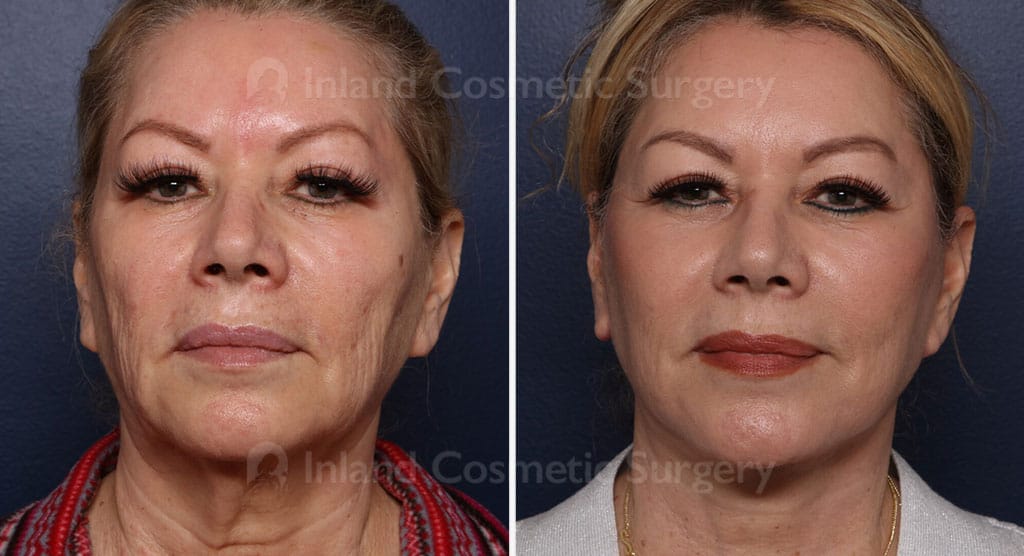
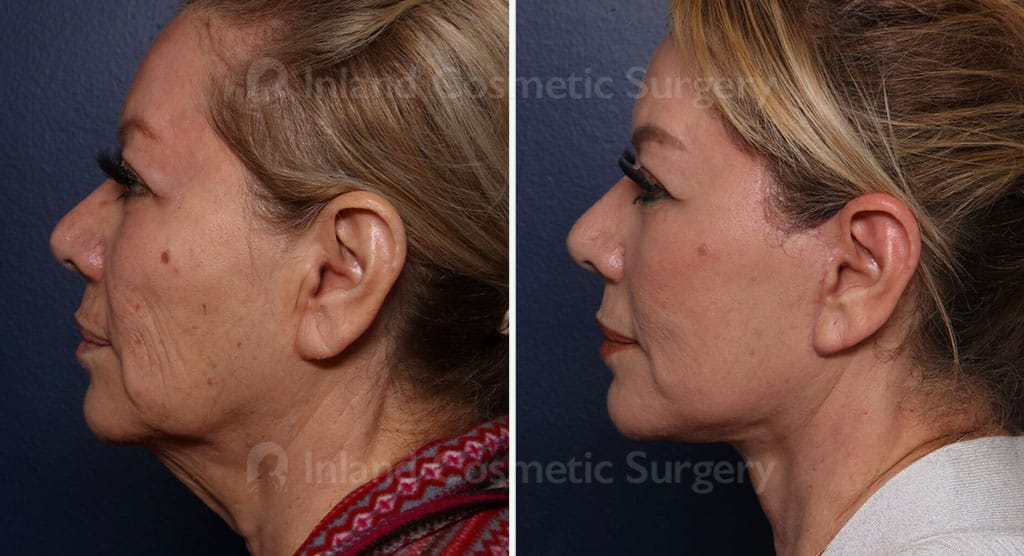
This is a 66-year-old patient shown 3 months post-op from facelift, neck lift, and CO2 laser to her full face.
In patients with very fine wrinkles of the skin surface, a facelift may be of limited benefit: other procedures, such as laser resurfacing or chemical peels, can address these skin texture issues. We have found that the combination of a facelift with laser resurfacing enhances the benefits of both procedures and results in a greater improvement of the overall facial appearance.

“The surgery went perfect, the outcome was amazing, the doctor is fantastic, my face is perfect”
- Key Benefits
- Glossary
- More Natural Results: The deep plane facelift technique allows for more natural-looking results compared to traditional facelifts, as it addresses deeper layers of facial tissues and muscles without overly tightening the skin.
- Longer-Lasting Effects: Due to the comprehensive nature of the procedure, the results of a deep plane facelift can last longer than those of standard facelifts, often maintaining their appearance for many years.
- Reduced Deep Wrinkles and Creases: A deep plane facelift can effectively diminish the appearance of deep-set wrinkles and facial creases, especially around the nose and mouth (nasolabial folds).
- Improvement in Jowl and Neck Appearance: The procedure can significantly improve the appearance of sagging jowls and lax neck skin, leading to a more youthful and refreshed neck and jawline.
- Anesthesia: Medications used to numb or sedate patients during surgical procedures, essential in a deep plane facelift to ensure comfort and safety.
- Blepharoplasty: Also known as eyelid surgery, a procedure that can be performed in conjunction with a deep plane facelift to rejuvenate the eyes by removing excess skin, muscle, and sometimes fat from the eyelids.
- Brow Lift: A surgical procedure to elevate drooping eyebrows, often performed alongside a deep plane facelift to enhance overall facial rejuvenation.
- Deep Plane Facelift: A comprehensive facelift technique that involves repositioning the entire facial musculature, including the SMAS layer, for more significant and natural-looking results.
- Facial Anatomy: The structure of the face, including muscles, fat, skin, and bone, crucial in understanding the effects and approach of a deep plane facelift.
- Incision: Surgical cuts made during the facelift, typically around the hairline and ears, essential for accessing and manipulating facial tissues.
- Jowls: The sagging lower part of the face around the jawline, often targeted in a deep plane facelift to restore a more youthful contour.
- Nasolabial Folds: Deep lines running from the sides of the nose to the corners of the mouth, which can be improved with a deep plane facelift.
- Platysma: A muscle in the neck area, sometimes tightened during a deep plane facelift to address neck sagging and banding.
- Recovery Time: The period needed for healing after surgery, an important consideration for patients undergoing a deep plane facelift.
- Rhytidectomy: The medical term for a facelift, a cosmetic procedure aimed at reducing wrinkles and sagging skin on the face and neck.
- SMAS (Superficial Musculoaponeurotic System): A layer of facial tissue under the skin and fat, manipulated during a deep plane facelift for long-lasting rejuvenation.
- Skin Elasticity: The skin’s ability to stretch and return to its original state, a factor that can influence the outcomes and suitability of a deep plane facelift.
- Subcutaneous Tissue: The layer of tissue beneath the skin, comprising fat and connective tissue, often repositioned in a deep plane facelift.
- Sutures: The stitches used to close surgical incisions, playing a crucial role in the healing process of a deep plane facelift.
How long does a facelift last?
Although the procedure does not stop the aging process, it certainly slows down the clock. The results of a facelift are typically long-lasting, though your genetics, degree of skin elasticity, and personal habits will play a role in how you continue to age. One of the ways you can maintain your results is by having a secondary tuck within the first two years after the original surgery. In this procedure, the original incisions around the ear are opened up and the scar tissue that had formed from the original surgery is tightened.
Since the scar tissue is stiffer than the normal subcutaneous tissue, tightening it results in a more lasting effect. The secondary tuck can be performed under local anesthesia or IV sedation. The recovery from this secondary operation is prompt, with many patients resuming normal activity within a couple of days. This procedure has become very popular among patients who have had a facelift.
To further enhance and maintain your surgical results, we offer a medical line of skin care products using Glycolic Acids and Antioxidant therapy, along with progressive skin peels such as Glycolic Acid peels and Microdermabrasion.
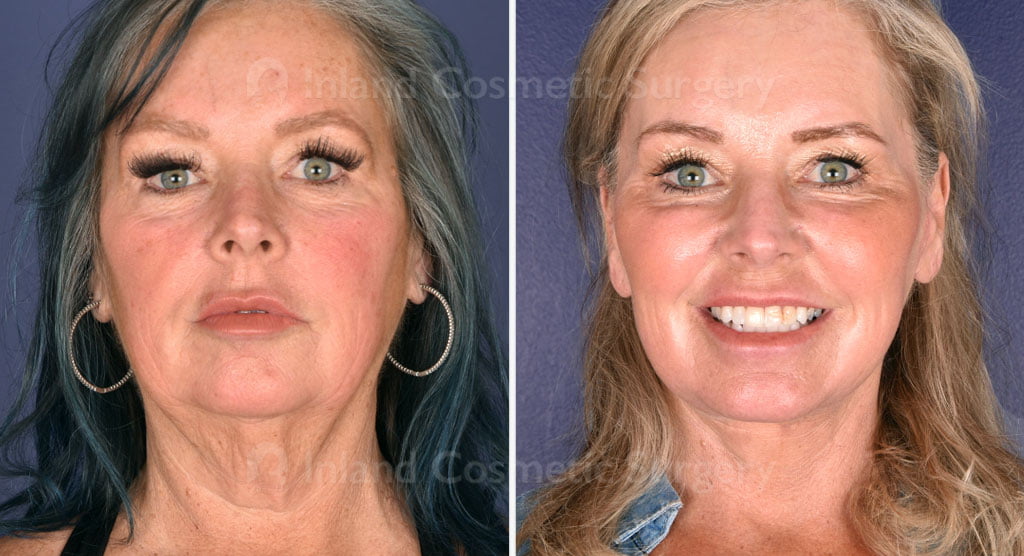
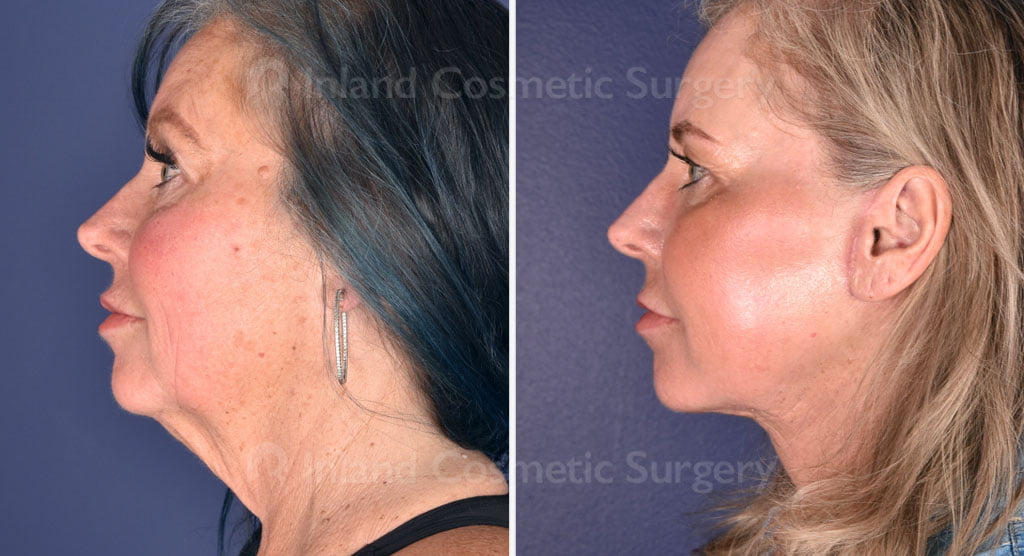
Dr. Haiavy’s patient is 6 months post-op from a facelift, neck lift, fat transfer to lower eyelids and cheeks and full-face CO2 laser resurfacing.
What is recovery after a deep plane facelift like?
While you’ll need to take some downtime, most of our patients are pleasantly surprised by how quickly they can start to resume normal activity. After your procedure, you’ll need to wear an elastic neck strap part-time for a week in lieu of heavy dressings, which can be uncomfortable.
A bit of swelling and bruising is completely normal and should resolve within a week or two. Bruising is usually limited to the neck area. Initially, there may be a feeling of numbness and tension around the incisions sites, but this will lessen with time as the sensory nerves regenerate. The tightness is mainly in the neck region and may last for a few weeks.
Patients are usually active within a few days of surgery, though they will need to take it easy. Makeup can be applied within a couple of days of surgery. For several weeks after surgery, patients are advised to avoid sun exposure for best results. Healing is gradual and there is a constant improvement in the first few weeks. Final results may not be apparent for several months. In most cases, a single procedure achieves the desired result though some patients may desire secondary procedures to achieve maximum benefit.
What to Expect After Facelift Surgery: The Truth about The Emotional Journey After a Facelift
Embarking on a facelift journey is not just about physical transformation; it’s also an emotional journey that many aren’t fully prepared for. In this video, we delve deep into the truth about the emotional experience after facelift surgery. From the initial elation of seeing the first glimpses of your new appearance to the possible anxieties and adjustments that follow, we cover the spectrum of emotions you might experience. Our leading surgeon Dr. Jacob Haiavy shares insights on how to navigate this period with grace, offering support strategies and real-life advice to help you manage the emotional highs and lows. We want our patients to understand the importance of mental health care, setting realistic expectations, and finding support through your recovery. Our patient care is designed to arm you with knowledge, comfort, and a sense of preparedness for the both the physical and emotional aspects of your facelift recovery.
Video Transcript
“When a patient comes in and they’re concerned about their face, one of the most common things they tell me is that when they look in the mirror, they feel like, “Who’s that old person looking back at me?” The way that I do a facelift is very different from other techniques such as the Lifestyle Lift or Quick Lift and other procedures that have become well-known because of their advertisements on TV. What we do is a combination of a deep plane facelift and repositioning of the deeper structures. We reposition the fascia along the cheeks and jawline, adjust the muscles in the neck, and re-drape the skin so the patient doesn’t look drawn—they look very natural.
I’ve seen people who have had plastic surgery where their face looks overly tight. But the goal isn’t to make someone look unnatural. I had a patient say, “I’m 73 years old—I’m not going to look 35, nor do I want to look 35. I want to look natural, I want to look my age, but I don’t want the turkey neck. That’s something that just makes me sick when I look in the mirror.” I think he’s done an excellent job, and I feel like I look my age in the best way possible. I’ve had other people tell me the same thing.
Most of my patients, even just two or three weeks after a facelift, find that no one can even tell they had surgery—because they look so natural.”
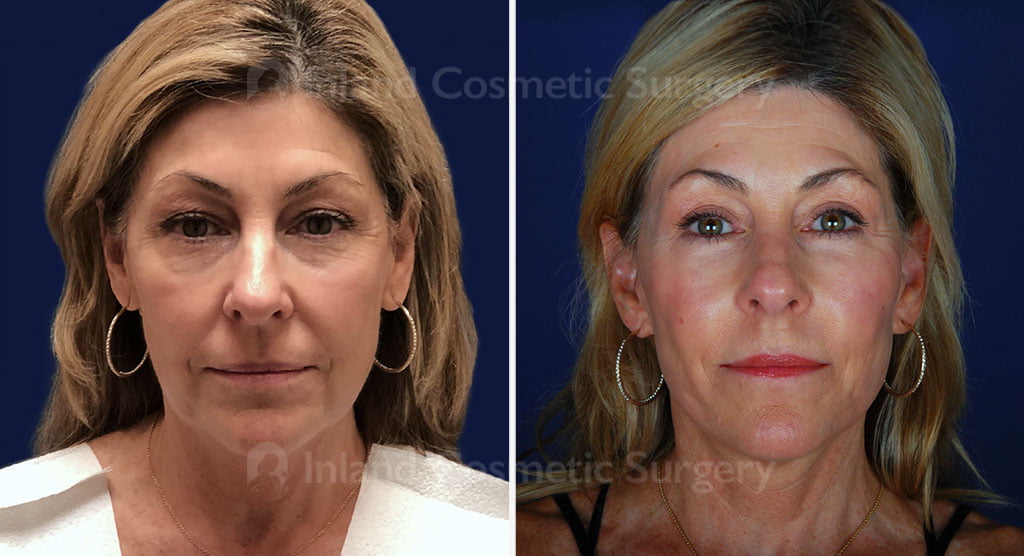
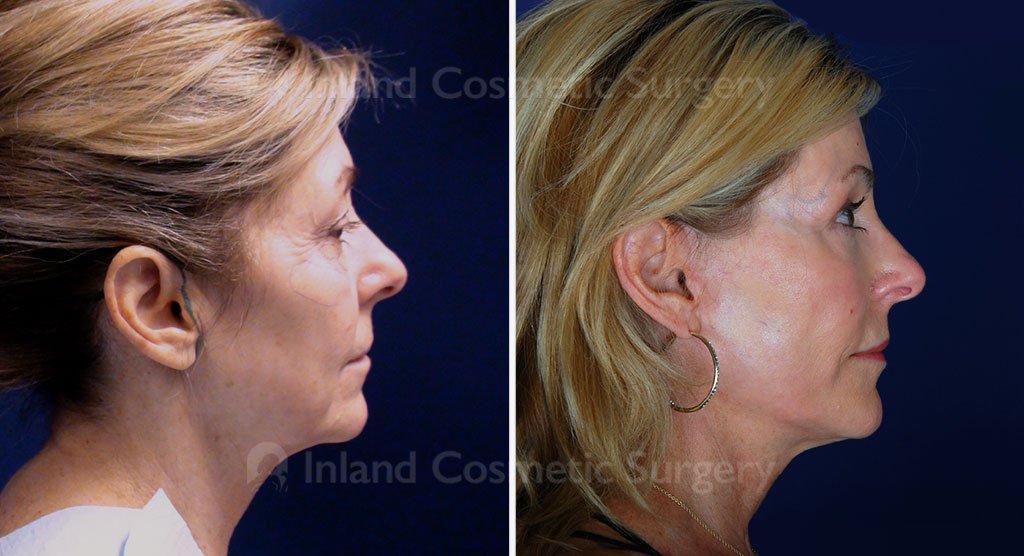
Dr. Haiavy’s patient had a deep plane mid-facelift, an upper and lower blepharoplasty, and CO2 laser resurfacing to the full face. She is only 6 weeks post-op.
Explore your options at a private consultation
We’d love to help you understand the options available to you and answer any questions you may have during a with one of our experienced cosmetic surgeons. Call us at (909) 987-0899 to get started!
Areas served:
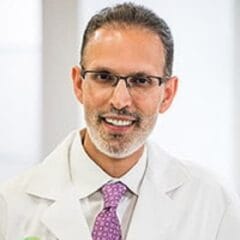
Medically reviewed by Dr. Jacob Haiavy — Updated on May 23, 2026